How to Prevent Phone Screen Scratches in 2026: 9 Methods That Actually Work

There’s no feeling quite like the tiny, gut-wrenching crunch you feel when you discover the first scratch on your pristine phone screen. It might be a hairline fracture only visible in direct sunlight, or a deep gouge your fingernail catches on. Once it’s there, you can’t unsee it. While the internet is full of dubious advice on “buffing out” scratches, the truth is that prevention is the only real cure. Removing a scratch from modern, hardened glass is nearly impossible without professional equipment that grinds down the entire surface. This guide is about avoiding that pain in the first place. We’ll cover the science of why screens scratch and give you nine practical, field-tested methods to keep your display looking brand new for years to come.
Why Phone Screens Scratch (and What Really Protects Them)
To understand how to prevent scratches, we first need to know what causes them. It all comes down to simple physics and a concept called the Mohs scale of hardness, which ranks minerals from 1 (softest) to 10 (hardest). Your phone’s screen, typically made of an aluminosilicate glass like Corning’s Gorilla Glass, is incredibly tough, rating somewhere between 6 and 7 on this scale. This is why common objects you might worry about, like car keys or coins (made of softer metals like steel and nickel, around 5.5 on the scale), are very unlikely to scratch your screen directly. So why do screens still get scratched in our pockets?
The real villain is often microscopic and much harder: sand. Common sand is mostly made of quartz, which clocks in at a 7 on the Mohs scale. A single grain of sand caught between your keys and your screen can act like a diamond scribe, leaving a deep, painful mark. It’s not the keys doing the scratching; it’s the harder material they’re pressing against the glass. Over time, even tiny dust particles accumulate, creating a fine web of micro-scratches. These tiny abrasions also wear down the screen’s oleophobic coating—the invisible, oil-repelling layer that makes your screen feel smooth and resist fingerprints. As this coating wears away, your screen not only feels grittier but also becomes a magnet for smudges.
9 Proven Ways to Prevent Phone Screen Scratches
Protecting your screen isn’t about one magic bullet; it’s about a layered defense system. Here are nine habits and tools that, when combined, offer the best possible protection against everyday damage.
1. Use a Tempered Glass Screen Protector
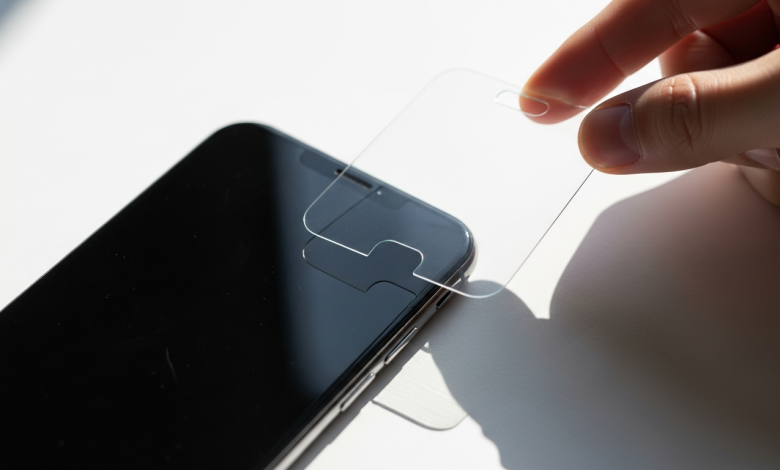
This is the single most effective step you can take. A tempered glass screen protector is a thin sheet of hardened, sacrificial glass that adheres to your phone’s screen. It’s designed to take the hit, absorbing scratches and even shattering from a hard impact to protect the display underneath. Modern protectors feel almost identical to the phone’s native screen, preserving touch sensitivity and clarity. Look for one with a “9H” hardness rating. While this rating is based on a pencil hardness scale, not the Mohs scale, it signifies a high level of scratch resistance against everyday objects. A good tempered glass protector also comes with its own oleophobic coating, restoring that smooth, smudge-resistant feel. It’s an inexpensive insurance policy that can save you from a several-hundred-dollar screen replacement.
2. Consider a Hydrogel/Film Protector
While tempered glass is the king of impact protection, it’s not the only option. Hydrogel or film protectors offer a different kind of defense. Made from a soft, flexible material like Thermoplastic Polyurethane (TPU), these protectors excel at absorbing minor scuffs and scratches. Their most touted feature is a “self-healing” capability, where small indentations and light scratches can disappear over time as the material returns to its original shape. This makes them fantastic for preventing the web of micro-scratches that accumulate from daily use. They are also a superior choice for phones with curved or waterfall displays, as the flexible film can conform to the edges perfectly where rigid glass cannot. The trade-off is a slightly rubbery feel compared to glass and less protection against drops, but for pure scratch prevention, they are an excellent alternative.
3. Get a Phone Case with a Raised Front Lip
Your phone case does more than just protect the back and sides. One of its most critical screen-saving features is the raised bezel, or lip, around the front edge. This simple design element ensures that when you place your phone face-down on a flat surface, the screen itself never makes contact. The case’s lip rests on the table, creating a protective gap that shields the glass from any grit or debris that might be there. Even a lip of just 1-2 millimeters is enough to prevent countless scratches from desks, countertops, and tables. When choosing a case, always check for this feature. It’s a passive form of protection that works 24/7, defending your screen from the most common source of micro-scratches: sliding it on a seemingly clean but actually abrasive surface.
4. Don’t Share Pockets with Keys, Coins, or Sand
This is a discipline, not a product, but it’s just as important. Your pocket is a high-friction environment. As you walk, anything sharing that space with your phone is constantly rubbing against its screen. As we discussed, keys and coins themselves are unlikely to be the direct cause of a scratch on modern glass. The real danger is the grit and dust they carry with them, or the pressure they apply to a trapped piece of sand. The solution is simple: dedicate one pocket solely for your phone. Your left pocket is for your phone, and your right pocket is for keys, coins, a lighter, or anything else hard and metallic. This habit costs nothing and eliminates a huge source of potential damage. It’s a small change in your daily routine that pays massive dividends in screen longevity.
5. Clean Your Screen with a Microfiber Cloth, Not Your Shirt
When you see a smudge, it’s tempting to just wipe your phone on your t-shirt or jeans. Don’t do it. The fabric of your clothing, especially after a day of wear, is embedded with microscopic particles of dust, dirt, and grit. Wiping your screen with it is the equivalent of rubbing it with very fine sandpaper. You might not see a deep scratch immediately, but over time, this habit contributes significantly to the breakdown of the oleophobic coating and the creation of a network of micro-scratches. The correct tool is a clean microfiber cloth. Its fibers are designed to trap and lift away dust and oil particles without being abrasive. Keep one at your desk and one in your bag. A quick, gentle wipe is all you need to restore clarity without causing damage.
6. Use a Phone Grip to Prevent Drops
Many of the worst scratches—and almost all cracks—happen during a single, catastrophic event: a drop. While a good case and screen protector are your last line of defense, the best strategy is to not drop the phone in the first place. This is where phone grips come in. Accessories like a phone grips & pop sockets or other ring holders and straps give you a much more secure hold on your device, especially on today’s large and slippery phones. They reduce hand fatigue and make one-handed use significantly safer. By drastically lowering the probability of an accidental drop onto pavement, gravel, or other rough surfaces, you’re not just preventing cracks; you’re preventing the deep, gouging scratches that often accompany a hard impact. It’s a simple, ergonomic addition that provides immense peace of mind.
7. Avoid Placing Your Phone Screen-Down on Rough Surfaces
Even with a case that has a raised lip, it’s a good habit to be mindful of where you place your phone. A granite countertop, a concrete ledge, a wooden workbench, or even a public cafe table can harbor hard, sharp particles. While a case lip helps, it’s not foolproof—an uneven surface could still allow a particle to make contact. The safest practice is to always place your phone face-up or on a soft, clean surface like a napkin or microfiber cloth if you must place it down. Think of your phone screen like a pair of expensive sunglasses; you wouldn’t slide them across a gritty table. Applying that same level of care to your phone will go a long way in keeping the screen in mint condition. It’s about developing a conscious awareness of the surfaces your device interacts with daily.
8. Be Extra Careful at the Beach or Pool
The beach is your phone screen’s worst enemy. As mentioned before, sand is primarily quartz, which is harder than your screen’s glass. A single grain dragged across the display with a little pressure is all it takes to create a permanent, visible scratch. When you’re at the beach, in the desert, or even at a dusty park, treat your phone with extreme caution. The best policy is to keep it in a sealed plastic bag or a dedicated pouch to protect it from ambient sand and dust. Never, ever put it in a pocket that might have sand in it. If you get sand on your hands, rinse and dry them thoroughly before touching your phone. It might seem like overkill, but this vigilance is the only way to guarantee you won’t leave your vacation with a permanent, gritty souvenir etched into your display.
9. Periodically Check and Replace Your Screen Protector
A screen protector is not a one-time purchase; it’s a consumable good designed to wear out so your screen doesn’t. Over months of use, it will accumulate the very micro-scratches and scuffs you’re trying to avoid on the main display. A heavily scratched protector can degrade the viewing experience, making the screen look hazy or creating rainbow effects. If your tempered glass protector gets chipped or cracked, its structural integrity is compromised, and it will offer significantly less protection against the next impact. Get into the habit of inspecting your screen protector every month or so. When it starts to look beat up, replace it. Most protectors come in packs of two or three for this very reason. A fresh, clear protector not only looks better but also provides the maximum level of defense.
What Protector Should I Actually Buy?
Navigating the sea of screen protectors can be confusing. Let’s break down the choices without getting lost in brand names. Your main decision is between tempered glass and hydrogel/TPU film. For most people, we recommend tempered glass. It offers superior impact protection, feels identical to the native screen, and has excellent clarity. Hydrogel is a better choice if you have a phone with sharply curved screen edges or if you prioritize self-healing from minor scuffs over drop protection.
Regardless of type, here are the features to look for:
- Hardness Rating: For glass, look for a 9H rating. This indicates strong resistance to scratches from everyday objects.
- Oleophobic Coating: This is non-negotiable. A good coating repels fingerprints and oils, keeping your screen feeling smooth and clean.
- Easy Installation Kit: Look for brands that include an alignment frame or guide. This makes a perfect, bubble-free installation incredibly easy.
- Coverage: Decide between “edge-to-edge” for full coverage or “case-friendly,” which leaves a small gap around the perimeter to prevent a tight case from lifting the protector’s edges.
- Multi-Pack: Protectors are consumable. Buying a 2-pack or 3-pack is often more economical and ensures you have a spare ready.
You don’t need to spend a fortune, but avoid the absolute cheapest options, as they often skimp on the oleophobic coating and installation tools. A well-regarded best tempered glass screen protectors is one of the best investments you can make for your phone.
Phone Cases That Actually Protect the Screen
A case is a critical part of your screen protection strategy. The key feature, as we’ve mentioned, is a raised front lip of at least 1-2mm. This is the absolute minimum requirement for a case to provide any meaningful screen protection from flat drops and surfaces. Beyond that, consider the case’s overall shock absorption. Materials like TPU and polycarbonate offer a good blend of rigidity and impact dispersal. Many reputable case makers provide a drop-test rating, often citing military standards (like MIL-STD-810G), which can give you confidence in its protective capabilities. For iPhone users in 2026, ensuring the case is MagSafe compatible is also crucial for charging and accessory use. When shopping, filter your search for cases that explicitly mention these features. A good protective phone cases is not just about aesthetics; it’s a functional tool for preserving your device.
Cleaning Routine — The Boring Habit That Matters
A consistent cleaning routine does more than just keep your screen looking good; it actively prevents scratches by removing the abrasive grit that causes them. Make it a weekly habit. First, power down your screen so you can see smudges and dust more clearly. Take a clean, dry microfiber screen-cleaning cloths and wipe in one direction across the screen. Avoid scrubbing in frantic circles, as this can just drag particles around. For stubborn grime, you can lightly dampen a corner of the cloth with a bit of distilled water or a dedicated screen-safe cleaning solution. Never spray liquid directly onto the phone. Most importantly, never use paper towels, tissues, or your shirt sleeve. These materials are abrasive and can leave behind lint and micro-scratches, defeating the entire purpose.
What If Your Screen Is ALREADY Scratched?
If you’re reading this with a screen that’s already seen better days, we understand your frustration. Unfortunately, as we mentioned earlier, truly removing scratches from modern phone glass is not a DIY job. Pastes and polishes you see online can do more harm than good, often by stripping away the oleophobic coating around the scratch, making it even more noticeable. Your best bet is to prevent it from getting worse by applying a screen protector now. A tempered glass protector can often hide the appearance of very fine micro-scratches by filling them in with its adhesive. For deeper scratches, you can learn more about your options in our detailed guides on how to get rid of scratches on a phone screen and removing scratches from an iPhone screen. But remember, an ounce of prevention is worth a pound of cure.
Frequently Asked Questions
Do screen protectors really prevent scratches?
Yes, absolutely. That is their primary function. A screen protector acts as a sacrificial layer that takes on the damage that would otherwise mar your phone’s permanent display. A high-quality tempered glass protector has a hardness level comparable to the screen itself, meaning it will resist scratches from keys and daily wear just as well. When it encounters something harder, like sand or a rough drop on concrete, the protector will scratch or crack, absorbing the damage. You can then simply peel off the broken protector and apply a new one, leaving your actual screen in perfect condition. They are an incredibly effective and affordable way to preserve your phone’s value and appearance.
Is tempered glass or hydrogel better?
Neither is objectively “better”; they are better for different purposes. Tempered glass is superior for impact protection and feel. It’s more likely to save your screen from a crack during a drop and feels exactly like the native glass. Hydrogel/film is superior for its self-healing properties against minor scuffs and its ability to perfectly fit phones with curved screens. If your main concern is dropping your phone, choose tempered glass. If you are meticulous about preventing the tiniest micro-scratches and have a curved-edge phone, hydrogel might be the better choice for you. Many people find the combination of a tempered glass protector and a good case to be the ultimate protective setup.
How often should I replace my screen protector?
There is no fixed timeline; you should replace your screen protector based on its condition. If it’s a tempered glass protector and it gets a crack or a significant chip, even on the edge, you should replace it immediately. A compromised protector has lost its structural integrity and won’t provide adequate protection against the next impact. For both glass and film protectors, you should consider replacing them when they have accumulated enough scratches to become visually distracting or hazy. For most users, this might be anywhere from six months to a year, but it depends entirely on your usage and environment. Since they often come in multi-packs, it’s easy to swap on a fresh one when the old one looks worn out.
Can sand really scratch my Gorilla Glass screen?
Yes, unequivocally. This is one of the biggest misconceptions in phone care. While your Gorilla Glass screen is incredibly resistant to materials like metal keys and knives, it is vulnerable to harder materials. The Mohs scale of hardness dictates that any material can be scratched by a material harder than it. Gorilla Glass is around a 6-7 on the scale, while quartz—the primary component of most sand—is a solid 7. This means a tiny grain of sand, especially when pressure is applied, can easily leave a deep and permanent scratch on your screen. This is why being cautious at the beach, desert, or even just a dusty environment is so critical for screen preservation.
Does AppleCare or other insurance cover scratches?
Generally, no. Standard manufacturer warranties and even premium insurance plans like AppleCare+ do not cover cosmetic damage. Scratches, scuffs, and dings fall into this category. These plans are designed to cover manufacturing defects (under the standard warranty) or catastrophic accidental damage, such as a cracked screen or water damage (which you would pay a deductible for). Since scratches don’t impede the functionality of the device, they are considered normal wear and tear. This is precisely why investing in preventative measures like screen protectors and cases is so important; your insurance plan is a safety net for major disasters, not for maintaining the cosmetic condition of your phone.
The Bottom Line
Keeping your phone screen scratch-free in 2026 doesn’t require luck; it requires a smart, layered approach. Combining a physical shield like a screen protector and a case with mindful habits is the only guaranteed way to maintain that out-of-the-box look. You don’t need to do everything on this list, but the more methods you adopt, the safer your screen will be. If you’re on a tight budget and can only make one purchase, make it a high-quality tempered glass screen protector. It offers the most significant protection for the lowest cost and is the foundation of any good screen-care strategy. Protect your investment, and you’ll avoid the regret of that first, permanent scratch.