Lenovo vs Samsung Chromebook: Get Rid Of The Confusion (2026)


Read Out More:
Head to Head Comparisons
- Lenovo Flex vs Ideapad: Which Will be Your Favorite?
- iPhone SE vs Google Pixel 3a || Make The Right Buy
- Ryzen 3100 and 3300x || Is Intel in trouble?
- Cloudways Vs Siteground – Which Wins The Battle?
- iPhone 11 vs iPhone 12: Which One Will Meet Your Demands?
- iPad Air vs. iPad Mini: What Will You Select?
- Surface Pro vs Laptop: What will be the Best for You?
Review Articles
Best Tech Product Reviews
- 7 Best iPhone SE 2020 Cases – Complete Review Combo for User Support
- Let’s See Which iPhone Has The Best Camera
- 5 Budget-Friendly But Best Smartwatch For Reminder
- 7 Best Samsung Galaxy Watch 3 Bands For Attractive Look
Chromebook is not a device for students or kids anymore. You can use them in your work area as well. From students to the workplace, it is not an easy way to come across. But Chromebooks have significantly evolved their performance in recent years.
Updated for 2026: This guide has been refreshed to help you navigate the current Chromebook market between Lenovo and Samsung, while preserving valuable insights from earlier models.
Lenovo and Samsung are the topmost brands in Chromebook. That is the reason why all of us roam like confused people when we decide to buy one of their devices. But there will be no difficulty selecting one after you go through the Lenovo vs Samsung Chromebook theme.
Let’s begin to see what they have to say about their models of Chromebook. Therefore, distinguish your preference.
Differences Between Lenovo vs Samsung Chromebook
| Lenovo Chromebook | Samsung Chromebook |
| Brand | |
| Lenovo | Samsung |
| CPU | |
| Intel/AMD/MediaTek/ARM | Intel Celeron and Core |
| Touchscreen | |
| Both touch and non-touch | Both touch and non-touch |
| Convertible | |
| Both Convertible and non-convertible | Both Convertible and non-convertible |
| Operating system | |
| Chrome OS | Chrome OS |
| Storage | |
| 16-64GB | 16-256GB |
| RAM | |
| 4GB | 4-8GB |
| Display Size (change as per models) | |
| 10.1 Inches- 15.6 Inches | 12.2 Inches-15.6 Inches |
In A Hurry? Pick One From Here
| Top Model | |
| Samsung Chromebook | Lenovo Chromebook |
Samsung Non-Touch Chromebook Laptop (the 2026 successor may be worth considering) continuous responsiveness
| Lenovo N22 Chromebook (the 2026 successor may be worth considering) stability of computing and versatility
|
Samsung Chromebook 3 (the 2026 successor may be worth considering) improvement in productivity
| Lenovo – Chromebook Flex 3 (the 2026 successor may be worth considering) / Lenovo Chromebook flex 3 (the 2026 successor may be worth considering) long-lasting performance
|
Samsung Electronics Chromebook 4 (the 2026 successor may be worth considering) Ultra-fast connectivity
| Lenovo N4020C Chromebook (the 2026 successor may be worth considering) High-Quality Product
|
Samsung 11.6″ Chromebook (the 2026 successor may be worth considering) extends your viewing opportunities
| Lenovo Chromebook IdeaPad C330 (the 2026 successor may be worth considering) easy-to-use Chrome OS
|
Samsung Chromebook 4 (amazon renewed) (the 2026 successor may be worth considering) co-operative and fully-functional
|
|
Samsung Chromebook Pro (XE510C24-K01US) (the 2026 successor may be worth considering) perform with multitasking perfection
| Lenovo Chromebook S330 Laptop (the 2026 successor may be worth considering) built-in virus defense
|
Samsung Galaxy Chromebook (the 2026 successor may be worth considering) constant usage in any form
| Lenovo IdeaPad Chromebook Duet (the 2026 successor may be worth considering) / Lenovo Duet Chromebook (the 2026 successor may be worth considering) USI pen co-operative
|
Samsung – Pro (XE510C25-K01US) Chromebook (the 2026 successor may be worth considering) operates at the activity of life
| Lenovo 100E Chromebook 2ND Gen (the 2026 successor may be worth considering) Climate pledge friendly
|
Samsung Chromebook Plus V2 2-in-1 Laptop (the 2026 successor may be worth considering) Experience the potential of a specific built-in pen
| Lenovo Chromebook Duet 2-in-1 Tablet (the 2026 successor may be worth considering) flip-and-fold changeable design
|
SAMSUNG Chromebook 4+ (the 2026 successor may be worth considering) Military-grade durability
| Lenovo IdeaPad 3 Chromebook (the 2026 successor may be worth considering) Ultra-portable design
|


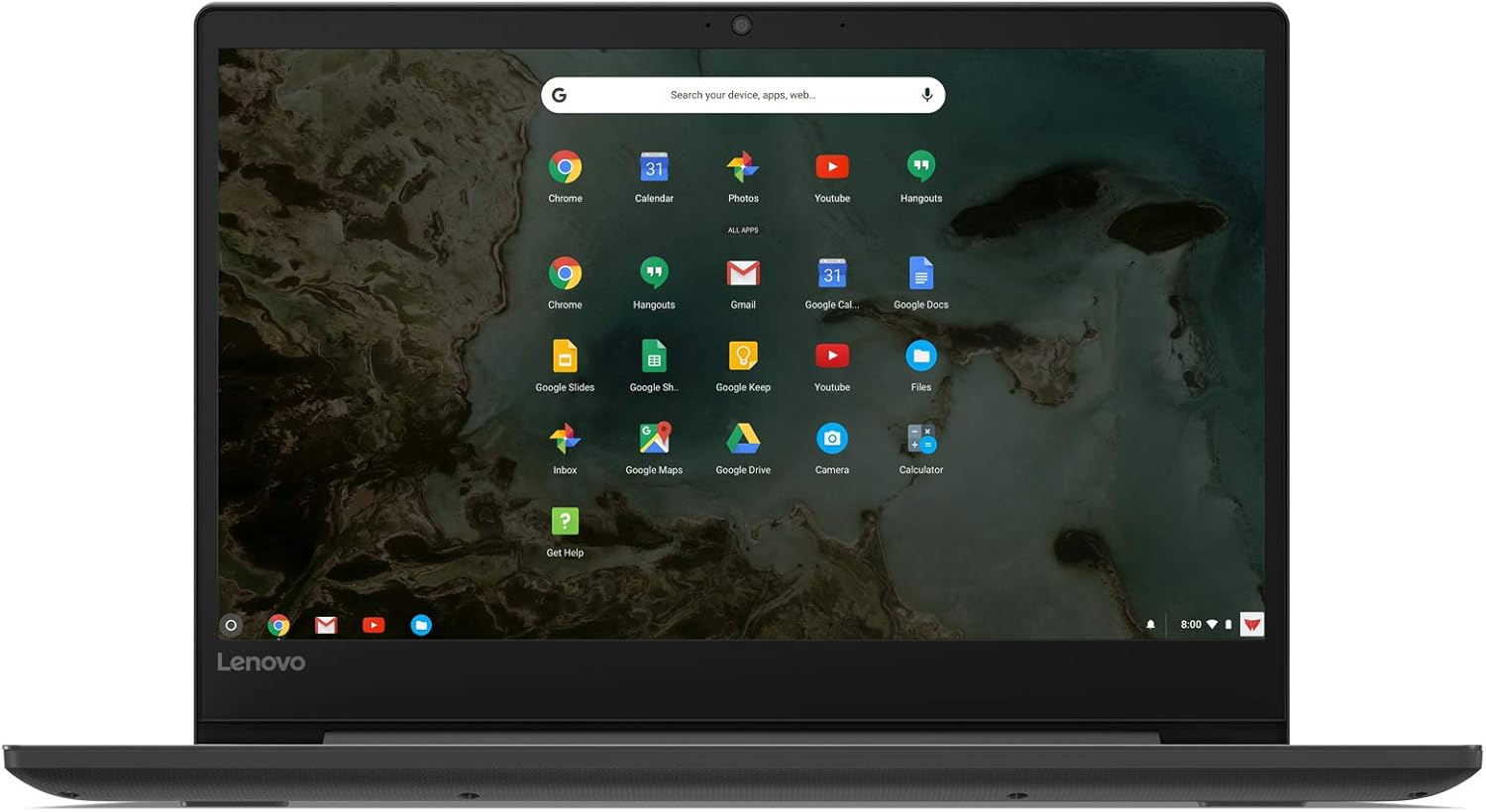


Receive a breakdown of the features of the Lenovo vs Samsung Chromebook. Then decide which one is for you and fulfill your task.
Budget Friendliness of Lenovo vs Samsung Chromebook
Budget always plays a great deal to buy any gadget. Contributions of money will decide what type and what facilities you will get from the Chromebook you want. Or should we say that according to the requirements of the performance budget or price will be decided?
The more features you want you to have to your Chromebook, the more you need to pay. But don’t worry, you will get the best budget Chromebook via Samsung Chromebook 3 (the 2026 successor may be worth considering). It will be an excellent choice for light browsing multitasks.

This model has an 11.6-inch display, along with a slim and movable design, which will work as a notebook. The processor is of 1. 6 GHz Intel Celeron that helps to operate many works together. Even you will have the water-resistant quality from this model with flash memory of 32GB eMMC and 4GB RAM.
On the other hand, Lenovo IdeaPad Chromebook Duet (the 2026 successor may be worth considering) offers a budget-friendly Chromebook with a 10.1inches display with a stand-out design. With a processor of MediaTek Helio P60T, this one functions reasonably well. Existing 4GB RAM and 64GB storage will likewise help you to accomplish your results quickly.

If we say which one will be the best choice for you, we will recommend that you go with your needs. If you need a decent display, Samsung goes beyond the Lenovo. Otherwise, Lenovo has more storage than Samsung, and we can’t deny it too.
Lenovo vs Samsung Chromebook’s Durability
Durable products are always a better option than anything else. We are bound to be the consumer of durable Chromebooks. That Chromebook won’t need frequent maintenance and won’t even stop working from any accidental drop.

For durability, Lenovo 100E Chromebook 2ND Gen (the 2026 successor may be worth considering) and Lenovo Chromebook C330 (the 2026 successor may be worth considering) will be a great choice because it passes the drop test very satisfactorily. So you don’t have to be worried when you accidentally drop the device. Even with this model Lenovo Chromebook, you will get the facility of kid-friendly and resistant quality.

For those who want an affordable but working great Chromebook for students and kids, then seniors can give a shot with Lenovo 100E Chromebook. On the other hand, Samsung has many models, but as per the test, Samsung Chromebook 4 (amazon renewed) (the 2026 successor may be worth considering) is well worth the money and effort. Honestly, Amazon is guaranteed this model Chromebook, and they are often giving quick support for it.

You will be a fortunate owner of such a Chromebook that is supported by the Amazon renewed guarantee. Chrome book 4 is capable of reducing the electric waste as well as expands the lifetime.
Battery Life Variations Between Lenovo vs Samsung Chromebook
At the end of the day, we need a considerable time battery life for electronic products that can use for many hours. And when we talk about Chromebooks, it needs to be well off in terms of battery life. When a Chromebook is there for multiple tasks but doesn’t provide the battery, then it is a waste of money, so this point is similarly a considerable fact.
If we talk about the Lenovo and Samsung Chromebook, then from all the other models, we found Samsung Chromebook 4 (the 2026 successor may be worth considering) a better battery that consists of a 2-cell Lithium-ion battery. With this, you will get up to 12.5 hours of work experience in various usages.

You can browse all the tabs smoothly with it, and it will work all the multitasking satisfactorily. Let us inform you that the upgraded 4GB LPDDR3 memory will make all these works working at high speed.
Lenovo provides the Lenovo IdeaPad 3 Chromebook (the 2026 successor may be worth considering) with a 3-cell lithium-ion battery and empowers battery life of more than 10 hours. So people who want more battery life then go with the Samsung option as well as the Lenovo is not a wrong choice either.

Lenovo vs Samsung Chromebook: RAM and Storage Variety
RAM helps to make work faster and avoid making them feel slow or showing lag in the middle of the task; in Chromebook, 4GB RAM is enough to function all the charges. Linux works well, even with less RAM capacity. However, both Lenovo and Samsung Chromebook use Chrome OS that is a scaled-down Linux desktop. It will not struggle with less RAM.
When we see these two brands of Chromebooks here, we have two choices of both brands. The Lenovo Chromebook Duet 2-in-1 Tablet (the 2026 successor may be worth considering) will perform well with 4GB LPDDR4X RAM and 64GB eMCP storage in the Lenovo brand. It will be a great way to make your work faster and give you massive storage to safely save your data.

On the other side, SAMSUNG Chromebook 4+ (the 2026 successor may be worth considering) has 4GB LPDDR4 RAM with 32GB eMMC storage. You will get fast performance with RAM and also will get decent storage. Though it has less storage than Lenovo, it will be enough for regular or small tasks.

So choose which one will be your choice because they give you different work experience in their way. If you are okay with the price and storage, then go with Lenovo. But if you don’t want to spend much and it will be enough for you to have less storage, go with Samsung.
Operating System and Processor of Lenovo vs Samsung Chromebook
OS or operating system is the same for Lenovo and Samsung Chromebooks. They have used the Chrome OS in their Chromebooks. The Linux-based Chrome OS helps the device to work with multiple tasks effortlessly and fast as well.
Second thing if we see Samsung and Lenovo’s processors, they mostly used intel and MediaTek processors to run their Chromebook. If you choose the intel processor Chromebook from any brand, that will allow you to run the Linux apps, Android apps, and Chrome apps. Other than that, all the web browsing experience will be more quickly than you ever imagined.
MediaTek processors are also a great processor to work with. Lenovo Chromebooks are generally noticing to use this processor in their Chromebooks. Both the processors are promising, so there will be no need to worry that you will assure their performances.
Display and Touchpad Quality of Lenovo vs Samsung Chromebook
The display is the central part of any electronic device, and in Chromebook, it is not different either. For this device, a 10 to 15 inches display will be incredible. The display is the section where you will get all the information or output of your tasks. From the screen resolution to size, it has to be perfect for your taste.

If we see which Chromebook from Lenovo and Samsung supplies, Lenovo Chromebook C340 Laptop (the 2026 successor may be worth considering) and SAMSUNG Chromebook 4+ (the 2026 successor may be worth considering) has the maximum display size of 15.6 inches with a full-screen resolution 1920 x 1080. They both have full HD quality more giant screens to view the contents easily.

In Samsung Chromebook 4+, they have used or designed the screen with the minimized bezel. With a portable frame of the immersive and enormous display, you will experience the best way to get a smooth background.
Whether on Lenovo C340, they designed the Chromebook with FHD IPS display and a narrow bezel. This touchscreen display submits the wide-angle screen, and even you can drag or click precisely on the screen.
Both the models are better than each other. So you can go with any one of them without any second thought. Wide screens are always a good idea to get the best out of the box experience.
Lenovo vs Samsung Chromebook’s Performance Factor
In the past, many of us complained about the Chromebooks that don’t work correctly or showing tantrums when delivering essential works. But now it is not a problem because new Chromebooks provide as many facilities as you want for your business. However, it will depend on how much money you are investing, but budget-friendly Chromebooks are not bad for performance.
In terms of performance, Lenovo Duet Chromebook (the 2026 successor may be worth considering) is the best in its other model of Chromebook. From this model, you will get 2 in 1 along with a convertible Chromebook. You can easily convert it from laptop to tablet within some seconds. Full HD display of 10.1inches 400 nits has a remarkable dual-tone design, which attracts the most. Moreover, it’s processor and storage with RAM is again recommendable.

The Samsung brand has the best performance Chromebook, and that Chromebook name is Samsung Chromebook Plus V2 2-in-1 Laptop (the 2026 successor may be worth considering). This model has a 12.2inches FHD display with a built-in pen experience. Its long-lasting battery will give the maximum performance along with the Intel Celeron processor.

It is hard to select one from the two models, but you won’t buy or get two of them simultaneously. So go with any one of them, and you won’t lose anything that can’t provide the other one.
Backlit Keyboard Facility of Lenovo vs Samsung Chromebook
Though most Chromebooks come with a touchscreen facility, if you want and don’t get that touchscreen Chromebook, you can get that if you wish to get both touchscreen and keyboard facilities. Mostly backlit keyboards are a demand for low light environments. You will see the symbols on the keys easily with this characteristic. In some backlit keyboards, you can modify or adjust the brightness levels as well.
Straight after, the Samsung – Pro Chromebook (the 2026 successor may be worth considering) has a touchscreen 12.3inches display. Still, you will get a spill-resistant backlit keyboard for better usability. It will look great in low light, as well as you will see the letters effortlessly, and your work will not get hampered because of the low light and get 8 hours of battery life too.

Besides Samsung, Lenovo also offers an excellent typing experience with their Lenovo Chromebook Flex 5 (the 2026 successor may be worth considering). The entire backlit considers a key travel distance of around 1.4 mm in laptop mode. With a backlit design, the device provides 10 hours of battery life.

If you want us to choose one for you, we will go with the Lenovo Chromebook other than Samsung because it provides much more battery life than the Samsung pro Chromebook. But Samsung is a great deal for a backlit keyboard, likewise Lenovo.
What Should Be Your Selection Between Lenovo and Samsung Chromebook?
Samsung and Lenovo are both the best brands you can get for yourself. If we give you an option from them, it will be a tough job for us. But it is also a fact that Samsung devices are way more expensive than Lenovo. It is the main difference between these two companies.
That’s why you can see the price before you get a Chromebook. If you can afford the Samsung Chromebooks, then go for it, but if you can’t, then Lenovo will be a great choice indeed.
Now when we think of both the brands’ Chromebook’s performance, two of them have excellent performance ability to make you feel better for your purchase in this sector.
Each time according to your criteria, each of Samsung and Lenovo’s models will win the race. So it mainly depends on your needs and wishes to select the appropriate one for yourself.
Read Out More:
Head to Head Comparisons
- Lenovo Flex vs Ideapad: Which Will be Your Favorite?
- iPhone SE vs Google Pixel 3a || Make The Right Buy
- Ryzen 3100 and 3300x || Is Intel in trouble?
- Cloudways Vs Siteground – Which Wins The Battle?
- iPhone 11 vs iPhone 12: Which One Will Meet Your Demands?
- iPad Air vs. iPad Mini: What Will You Select?
- Surface Pro vs Laptop: What will be the Best for You?